
Piute Parole and Probation Compared
Utah divides the power to order supervision from the work of supervising a person. The Utah Board of Pardons and Parole decides whether a state prisoner will be paroled before sentence expiration. It can also set conditions, issue later decisions, terminate parole, or act on an alleged violation. Utah Department of Corrections Adult Probation & Parole, often called AP&P, supervises parole for the Board. The same UDC division supervises felony probation ordered by a court.
Both statuses can describe a Piute County resident who is outside jail or prison. Their source is different. A Board order supports parole. A Piute court judgment and probation order support probation. Neither status means the case has been erased or the sentence has ended. Discharge means corrections jurisdiction has ended, while release on supervision means the person remains subject to stated terms.
| Point | Parole | Probation |
|---|---|---|
| Legal source | Utah Board decision after a prison sentence | Sentencing court order |
| Custody before supervision | Release from state prison custody | May begin without prison and may follow county jail time |
| Local supervision | UDC AP&P Region 4 Richfield | UDC AP&P for current felony probation |
| Best decision record | Published Board order | Piute court docket and judgment |
| End point | Board termination or sentence expiration | Court-ordered completion or termination |
- Parole
- Release from prison into community supervision before the state sentence ends.
- Probation
- Community supervision imposed by the sentencing court, sometimes after a period in jail.
- Discharge
- The formal end of supervision or corrections jurisdiction.
- Absconder
- A supervised person alleged to have stopped reporting or left supervision without authorization.
Verify Piute Post-Release Supervision
Start with the UDC Offender Search. It covers people currently incarcerated or currently supervised on felony probation or parole. Search by UDC number when known. A name search needs at least one letter of both the first and last name. Compare date of birth, offender number, legal status, offense, court case, and location before accepting a match. A name alone is too weak.
The next source depends on the status. For parole, use the Board hearing and decision search by full name, offender number, or date range. The final Board order is the decision record. For probation, inspect the Piute court docket for the judgment, supervision order, later modification, or termination. The Piute County released inmate search and record path explains how the court, custodial jail, and UDC records fit together.
- Identify the person with more than a name. Use a UDC number, date of birth, court case, or known conviction facts.
- Read the UDC legal-status field. A parolee or probationer is in the community but still under supervision. A prison location means the person remains confined.
- For parole, locate the Board order and distinguish a hearing date, granted parole date, rescission, and termination.
- For probation, check the Piute court order that imposed or ended the term.
- Contact Region 4 for a legitimate office-routing or record-correction question. Do not expect protected case notes to be disclosed.
- If no result appears, request existing parole or discharge information from UDC instead of treating the blank result as proof.
Piute Parole Decisions and Dates
A Board hearing is not a release event. Utah first assigns an estimated hearing period, then schedules the actual hearing closer to that time. An original hearing can lead to parole, rehearing, paper review, or another decision. A later rescission proceeding can remove a date before physical release. Published Board Orders carry more weight than a calendar entry, and the Board advises that decisions can take time to issue after a hearing.
Search results accept a first and last name, an offender number, or a date range. Known aliases may also appear. If the record is blank right after a hearing, search again rather than inferring denial or release. The Board provides 801-261-6464 for access help and verified status. Utah VINE may send a parole-date alert, but UDC and the Board both warn that automated notice should be independently checked.
The official Board search screen shows the available name, offender-number, and date-range routes.
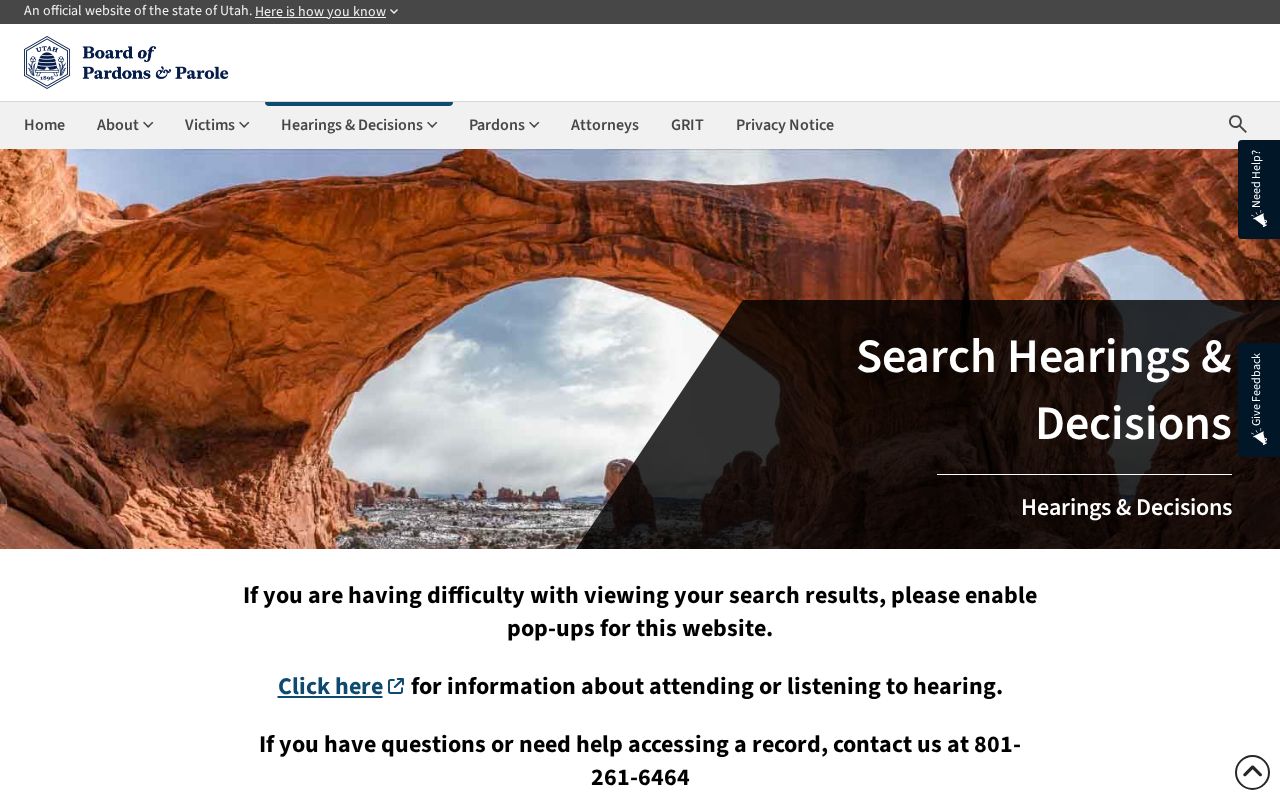
The image is an interface reference, not proof that any named person was released or remains supervised.
Note: A scheduled parole date still needs a final Board record, UDC status check, and confirmation of the actual custody movement.
Piute Probation Office in Richfield
Piute County has no separate local AP&P office. UDC assigns the county to Region 4 Richfield. That office also serves Garfield, Juab, Millard, Sanpete, Sevier, and the west half of Wayne County. Its regional role explains why a Piute resident reports outside the county. Use the office for supervision routing and correction of current UDC status, not as a substitute for a Board parole order or a court probation order.
UDC Adult Probation & Parole, Region 4 Richfield
835 E. 300 North, #500
Richfield, UT 84701
435-896-2770
Official hours were not stated in the reviewed source. Confirm availability before visiting.
The UDC probation and parole office page identifies the Richfield coverage and contact information.
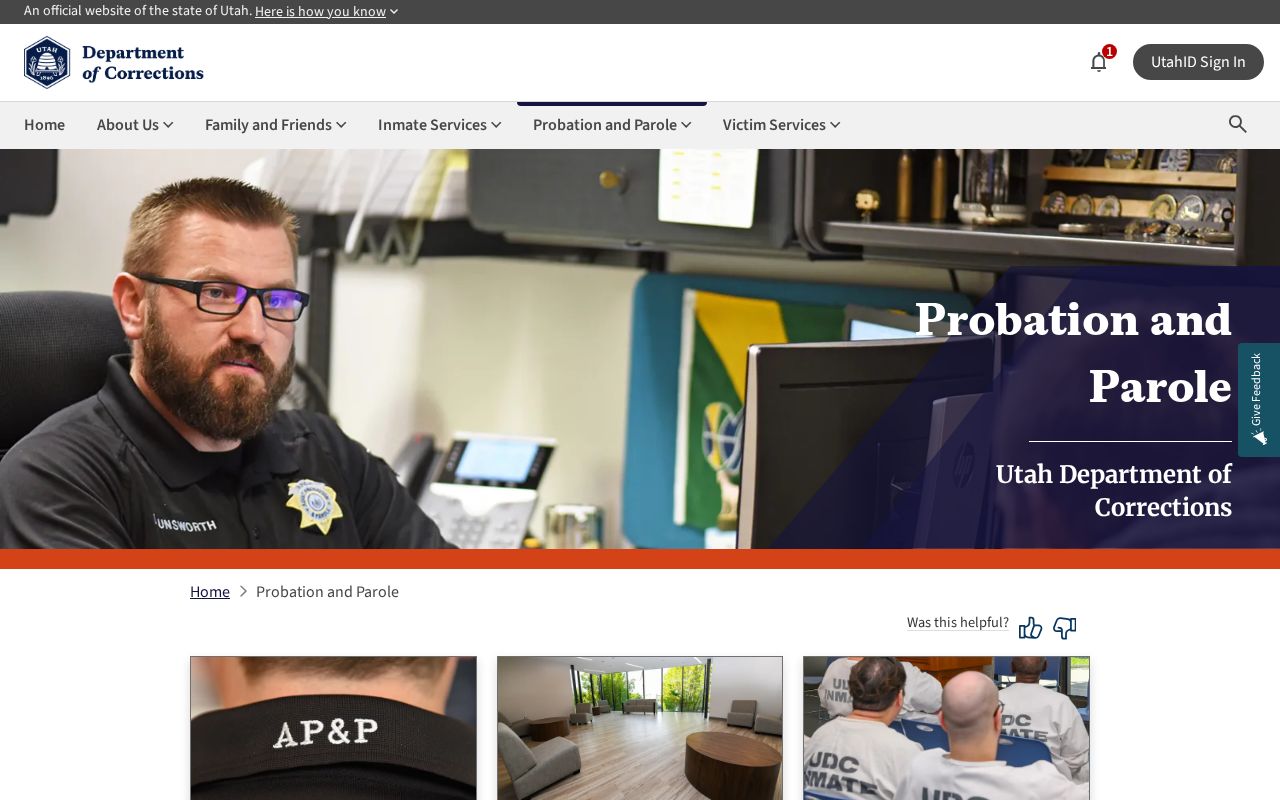
This regional listing connects Piute County supervision to the correct UDC office without implying that a local Piute office exists.
Piute Supervision Warrants and Violations
Conditions are the rules a person must follow while supervised. Their exact terms come from the governing Board or court order and can differ by case. AP&P agents monitor compliance and may report an alleged violation. A parole violation can lead to a Board process, while a probation issue returns through the court process that controls the sentence. An allegation is not the same as a final finding.
Absconding means an alleged failure to remain in contact or comply with supervision. AP&P says agents may request arrest warrants, and fugitive teams can work with other agencies. Yet Utah has no verified public statewide AP&P absconder list. Never label a person an absconder from a missing UDC result. Check the Board record for a public Board warrant entry when parole is involved, and use the proper court or warrant-holding agency for other warrant questions.
VINE notices can report certain movements, but a transfer to a county jail or community correctional center is not discharge. It reflects continued custody or supervision. Likewise, an arrest during supervision does not by itself explain whether parole or probation was revoked. The later order controls that point.
Note: A no-result may reflect completed supervision, a spelling mismatch, a county-only matter, or a data issue rather than a warrant.
Piute Parole Reentry in Richfield
The Richfield Satellite Treatment Resource Center is a named resource within Piute County's AP&P region. UDC says it offers substance-use education and places it at the same Richfield address as the Region 4 office. This makes it a useful point of contact after release, but the listing does not promise admission, a specific program slot, or eligibility for every supervised person.
Someone may leave a Utah prison through the state release process in Salt Lake City and later report in Richfield because Piute falls within Region 4. Release location, home county, and supervision office are separate facts. Verify each one. The Board and UDC establish the prison release, while AP&P establishes the assigned reporting route.
For current program details, consult the UDC Treatment Resource Centers page or ask Region 4. A resource referral should be confirmed before travel.
Piute Release Documents and Corrections
UDC reentry material discusses help with vital records, including birth certificates and Social Security documents. Those records can matter when a person returns to the community. They are not the same as a release record. A release record identifies a custody event, while a vital record proves an identity fact. Keep the requests separate and use the agency responsible for each record.
If UDC's public legal status or parole, expiration, termination, or discharge date appears wrong, use the public-information and GRAMA route identified by UDC. Include the UDC number, date of birth, court, and case when known. Ask for an existing field or correction process, not a new calculation. Policy AG47 places parole and discharge dates in the public offender-information category, though protected case notes remain outside that category.
The UDC reentry resources describe document help, while the public information office explains the official record route.
When Piute County Supervision Ends
Parole or probation ends through an official act, not merely because a name vanishes online. For parole, look for a Board termination, sentence expiration, or other final decision and confirm the UDC legal-status record. For probation, use the Piute court docket and termination order. A discharge is the end of corrections jurisdiction. It differs from release on parole, which leaves part of the sentence under supervision.
A fully discharged person may disappear from UDC's current-supervision search. Request the historic parole or discharge date from UDC when documentary proof matters. Utah GRAMA, Title 63G Chapter 2, provides the request framework, and UDC's policy identifies the relevant public fields. The office may still redact protected material, so ask narrowly for legal status and the actual date.
Use two sources when timing is important. Match the Board or court decision with UDC's recorded status. That approach separates a future date, a release into supervision, and the later end of supervision. Each is a distinct event in a Piute County case.